Let me know when that tide's coming in won't you

Let me know when that tide's coming in won't you

Saturday, 28 January 2012

Pennington Flash

A nice cold and bright forecast meant I was out before sunrise, and off to Pennington Flash to see what was on offer. You can never fail here, at one of the North West's finest birding sites. Such a mix of habitat opens up so many possibilities. I registered over 30 different species this morning. Nothing really out of the ordinary, but it's just a joy to be out with nature at that time of the morning. One thing that did catch my eye, were the Goldeneye going through their courtship display. Most unusal, and I found myself fixated with three males trying to woo two females. They didn't seem that interested but that didn't deter the males. Maybe they needed their beer goggles.

Goldeneye (not 007)

A Pennington favourite (and my Mum's favourite too)

A Stock Dove

Early morning from the Tom Edmonson hide

Wednesday, 25 January 2012

Looney Tunes


An early visit to Castleshaw Reservoir, Oldham, on Christmas Eve meant I managed to see a Great Northern Diver (also known as a Great Northern Loon) for only the second time. My first encounter was back in the spring of 2010 at Carsington Waters in Derbyshire. On that occasion there were both an adult and a juvenile, but sadly they stayed well out into the distance, and the use of the scope was crucial. This time, I was much luckier as the bird came to within 15 feet or so of the dam wall where I was standing in wait with the camera. The largest of our UK divers had been on the reservoir for a couple of weeks when I visited. Unfortunately the light was not that great, so the shots aren’t the best, but at least the rain held off while I was there, unlike the arctic wind which nearly cut me in two.

The Great Northern Diver

Thursday, 19 January 2012

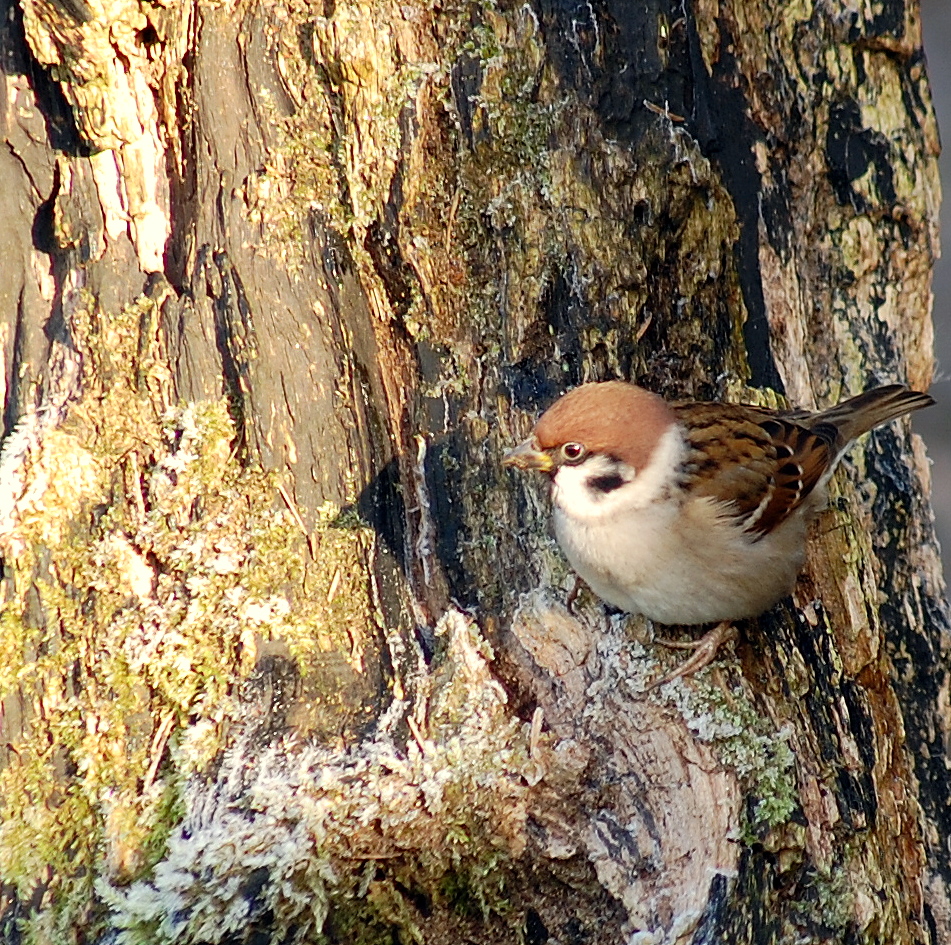
The humble Tree Sparrow

Having waited so long to get any half decent shots of Tree Sparrows, I thought I would share some more with you. These were all from my time in Glazebury last weekend. This little chaps population has declined so much in recent years that it is on the RSPB red list. Sometimes referred to as Mutton Chops because of the black marking on the cheeks. Smaller than a House Sparrow and somewhat more nervous. It seems that the slightest movement of anything sends these birds to the nearest hedge or tree. To be fair to them, having witnessed Sparrowhawks going into the bushes for a kill, it's no surprise.
They may not be everyone's cup of tea, but I like them and the fact that they make it difficult for you to watch them close up only adds to the attraction for me.

Look at those chops


Sunday, 15 January 2012

Down on the Farm

I had the pleasure of spending a good five hours in a private hide yesterday in Glazebury, Warrington. The hide is set up superbly, on farmland well away from humankind and is perfect for peaceful birding. It was a cold start with thick frost on the ground, but the sun was up first thing and soon moved into it's perfect position behind the hide. We were then treated to some fantastic bird action, with Tree Sparrows a plenty, Gold Green and Chaffinches, Blue, Great and Coal Tits, Jay, Pheasant, Wren, Great Spotted Woodpecker and the star of the show for me, a male Sparrowhawk. Sure, these are not particularly uncommon birds, but the opportunity to photograph them at close quarters was where the excitement lay for me. Some of my best pictures are below, but to be honest I am so pleased with a lot of them that I may have to post more later. An amazing day.

I've waited a long time to get a decent shot of a Tree Sparrow. 

Nuthatch

Goldfinch

I love a Great Tit

A little Jenny Wren, as my Nan calls it.

My highlight of the day, a Sparrowhawk.

Sunday, 8 January 2012

Stockport Dippers


A bird that I like to think of as a bit dumpy but very elegant, is the Dipper. Living close to the Goyt Valley in Stockport provides me with ample opportunity to see these wonderful little birds, and they never fail to intrigue me. Watching them fly kamikaze into the river in search of food is quite an amazing sight. Dippers can then hold their own in some very fast flowing water, holding their heads out of the water every now and again for breath. Probably the most well known characteristic though is the link with it’s name and it’s ability to dip or bob. This is something that a lot of river birds do, such as the Kingfisher and Grey Wagtail. No one is quite sure why they do this, (and I am sure there is a reason) it’s just something for us to enjoy.

In typical pose

You look that way, and I'll look this.....


Into the breach he goes.

Monday, 2 January 2012

Pennington Flash

The forecast for this morning (for once) was for sunshine and no rain. So, I decided to get myself over to Pennington Flash in Leigh to try and catch up with the Scaup that had been reported recently. When I arrived at 8.30, there it was, close to the car park where previously reported. Doing what most other sane people do at that hour. Sleeping.
Light wasn't great, and then as the sun came up it didn't make it any easier really. But there is one picture below, more for record purposes. The Scaup is quite a bit bigger than the Tufted Duck although very simiar in looks. Rather than a black back, it has a greyish look, and no tuft.
There were lots of Widgeon, Goldeneye, Shoveler and Tufted Ducks. A couple of Kingfishers gave good views, proving that patience pays dividends. As usual from the Bunting Hide there were plenty of finches and a couple of Willow Tits too.
The Flash never dissapoints, and I managed to see 31 different species today.

Scaup, with Tufted Duck behind.


Mute Swan, giving me evils.


Bullfinch (regularly found from the Bunting Hide)

Canada Geese


Saturday, 31 December 2011

2011 Highlights (Part 3 of 3)


I managed to track down a few of my favourite birds this year. The Redstart, Pied and Spotted Flycatchers. The first two were located on the edge of Macclesfield Forest, whilst the Spotted Flycatcher (which had evaded me all year) turned up unexpectedly at Roding Valley Meadows in Loughton, Essex, on a trip to my parents. It gave good views for the two days I was there. Unfortunately the Redstart would not come down to a nice height for me, so this shot is from underneath it and through the trees, which is not the best angle to view this colourful bird. I hope to do better next Spring.


The Pied Flycathcer


The Spotted Flycatcher


Tuesday, 27 December 2011

2011 Highlights (Part 2 of 3)


Sandpipers of all varieties were seen throughout the summer. Although sadly, the one I wanted (Wood Sandpiper) escaped me, as I missed it on several occasions in Altrincham.
Green Sandpipers were plentiful at Pennington Flash, Leigh, as was the Common Sandpiper. A less common variety that I did manage to see was the Curlew Sandpiper.
My Waterbird/Wader highlight was probably the Avocet. Quite common on East coastal sites of the UK, but the one I saw was inland in Greater Manchester. Running the Avocet close, was the Water Rail I saw in the Lea Valley with my Dad. It gave great views dashing through the reed beds. Sadly I didn’t get any good shots of either, but here are some of the Green Sandpipers.


Green Sandpiper

These three weren't a crowd for me.

A nice shot with wings spread.


Friday, 23 December 2011

2011 Highlights (Part 1 of 3)


Approaching the end of the year, I thought I'd try and pick out my birding highlights of the last 12 months. There have been many this year in a list of 138 different species seen.

In no particular order, here we go. The year started well with an invasion of Waxwings from Scandinavia. I was fortunate to see some on four separate occasions from Stockport to Macclesfield. Listen for the trill that these birds make. It’s quite unmistakeable.
As Spring and Summer arrived so did our migrant birds, and as luck would have it so did a Wood Warbler, not far from my house in Carrs Wood, Bramhall. A fantastic bird, gave brilliant views for several weeks. A real delight, and a first for me.


My first encounter with Waxwings came in Wilmslow, where this shot was taken.


I liked this shot in black and white. These Waxwings were seen in Edgley, Stockport.


The Wood Warbler, which sang non stop for several weeks.


Wood Warbler again. This time getting ready to sing.


Sunday, 18 December 2011

My Patch, Woodford, Greater Manchester

The area I like to call my "patch" is right on the border of Greater Manchester and Cheshire. In fact it is the most Southerly point of Greater Manchester. The majority of the area I cover on my patch is farmland, with the exception of Woodford arerodrome which consists of a runway (quite obviously), some hangars, and lots of nice grassy fields surrounding it. There are some good wooded areas and also the River Bollin runs through it. There is also a private golf course.
So it goes without saying that most of the birds that I see are farmland birds. But Woodford has a wonderful habit of throwing up something different every now and again. My best finds so far have been a juvenile Stonechat, Female Redstart, Goldcrests, Merlin and just last week 38 Golden Plover sat on the runway with well over two hundred Lapwings. You just never know what will be there next time, and it makes me keep going back. My species list for the Woodoford area currently stands at 69 which I think is quite impressive. I know I have missed some good birds, as Cuckoos and a Red Kite have been seen in recent times.

Below are some of my Woodford shots to give you a flavour of what's around. I will certainly be posting more here in the near future.

The Juvenile Stonechat I found in 2010. This shot was taken by digiscoping at some distance.


Lapwings are present all year round at Woodford.


Curlews can often be heard in the Summer. This one was a bit of a menace on the golf course.


Northern Wheaters arrive towards the end of April. A fantastic little bird that I never tire of seeing.


Treecreepers are there if you can spot them, scurrying around the trees.


Friday, 16 December 2011

Snow is Falling.......

(and the birds need feeding)

We were greeted by the first snow of the winter this morning. Which can only mean one thing in my garden. Quick, feed the birds!
Food went down pretty sharpish and we were soon visited by the regular Cheadle Hulme birds.
Blue, Great and Coal Tit, House Sparrow, Robin, Dunnock, Blackbirds, Collard Doves, Wood Pigeona, Magpies, Starlings and a Rook.
I'd really like a Sparrowhawk to come down and take one of the feral Pigeons that seem to be around, but I am sure I won't be that lucky. Here's hoping though.


Go on, you know you want to.


A Blackbird


I can see you.


Wednesday, 14 December 2011

Martin Mere

I thought I'd start my first entry at Martin Mere, an amazing wildfowl and wetland centre in Lancashire. At this time of year especially, it is teeming with thousands of swans and geese. It's a great day out, with lots of birds to be seen at all times.  There are plenty of hides along well laid out paths, and feeding stations too. Here you will find the usual finches and tit flocks. A Kingfisher can regularly be seen, and on the day I went, there was a Red Kite and two Marsh Harriers. Two great birds to see in flight.

Below are some of my photos from my day at Martin Mere in September. Some of these are captively bred, but they are still quite nice shots.

This Red Crested Pochard posed nicely for me.


This male Common Eidur Duck was constantly preening and splashing.


Here we have two Pink Footed Geese either side of a Barnacle Goose.


Here you can see the numbers that were starting to build up in September.


And finally, a Whooper Swan.