Let me know when that tide's coming in won't you

Let me know when that tide's coming in won't you

Tuesday, 15 June 2021

Swifts

Over the years I've spent countless minutes and hours trying to photograph Swifts and members of the Hirundine family in flight, to no avail. Trying to master their movements is difficult. Getting the camera to focus on a small dark moving object in a wide expanse of blue or pale grey is very tricky indeed. It hasn't stopped me trying though. 

I seem to be getting better results with this camera than my previous camera. As yet it hadn't been trialled properly on this small moving target, but the autofocus seems to lock on better and it stays with the subject. So I tried again a few weeks ago, when the Swifts had just arrived. They were quite low in the sky and so this made it a bit easier for me. Anyway, I think these are the best result I have had and so I thought I'd share with you. 

I should say that if you click on a picture it will enlarge it for you.

Common Swift


This is my favourite


Friday, 11 June 2021

Danes Moss, Gawsworth Cheshire

I recently visited one of the Cheshire Wildlife Trust sties that I had not previously been too. This is situated in the Gawsworth area of Macclesfield and is a lowland raised bog. I went hoping to find or hear a Cuckoo. I had no such luck on this morning, but I thoroughly enjoyed walking around the area and familiarising myself it. There was a really nice circular boardwalk route, which took you through woodland, and across the more marshy areas.

There was plenty of birdsong, with Whitethroats, Willow Warbler, Chiffchaff and the odd Reed Bunting battling it out. The site information board shows that it is very good habitat for dragonflies and butterflies. I hope to head back here soon to see what I can photograph when the birds go quiet, which won't be too long now. In the meantime, here are just a few of the birds that I did see.

Reed Bunting


The Treecreepers were very busy collecting insects for their young.


This Common Whitethroat had some nesting material in its beak.


Saturday, 5 June 2021

Cley Marshes - East Bank

A walk along the East Bank at Cley is always a must for me when I'm in Norfolk. With my parents living so close to it I will usually do it several times during a stay. There is always something decent to see and through the different seasons you get a really good variety. The wintering geese have left for the time being, barring the Greylags and a few Canadas and Egyptian, but the summer migrants have arrived.

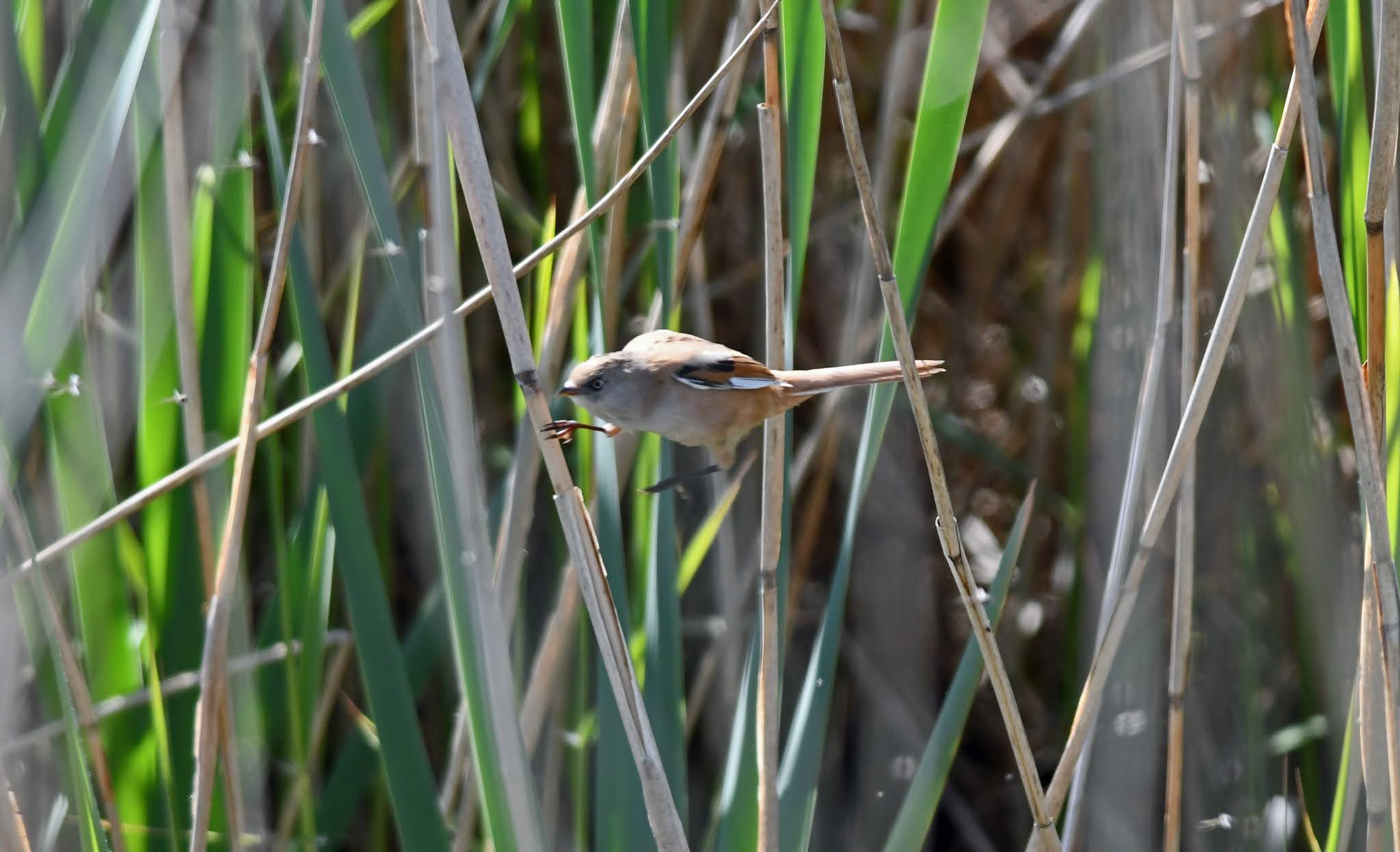
I was lucky to watch a Hobby fly over as it was catching insects. The warblers are in too, in the form or Sedge and Reed. The sound coming out of the reed bed is something to behold as the competition for space and territory takes a grip. I picked up the ping of a group of Bearded Tits. I always hope to see some when I'm here, but that is never an easy feat. Being in the right place at the right time, or good fortune is usually involved. This time they were working their way through the reeds close to the edge. The odd one would break cover and dive over the top of the reeds. A very good addition to the year list.

With Curlews, Lapwings, Redshank, a lone Spoonbill, Skylarks and the overflying Terns at the beach end it really was a great couple of hours spent here. Come the autumn time the waders will be back and the wintering wildfowl on the pools, which will make for a very different walk but still with a good amount of variety. It's a great place to watch birds and time go by.

Hobby


Little Egret

Marsh Harrier


   The Sedge Warbler is a real favourite of mine. I love the distinctive eye-stripe and it's song.


    The Bearded Tit never make it easy to see them, but maybe that's why it's such a thrill when you do.


Friday, 28 May 2021

Dartford Warbler on the Heath

A long awaited trip to see my parents after seven long months, took me to Norfolk once again. At this time of year the Dartford Warblers are busy nesting. Never the easiest bird to find, as they like to secrete themselves among the gorse and heather. They are a particularly shy bird, unless the male comes out to sing, or they are caught looking for insects and spiders. They do enjoy the sun though, and especially after a cold night. This can bring them higher up the bushes to where you may see them soaking up the warmth.

A lot of waiting is involved when looking for this species. Being able to spot any movement from the corner of your eye is also helpful. I have had many long mornings with nothing to show for my efforts. I have learnt to pick my time of year carefully now, and the reward is great. I would normally have been to look for them a month or so earlier but lockdown rules dictated otherwise, so I was a bit unsure as whether they would be as obliging. A long wait was still involved and the few minutes and seconds I got to see them was well worth it. The difference in time spent waiting and seeing is never fairly distributed, but a fair price to pay for such a fantastic looking bird, and one that we are privileged to have.

The male Dartford Warbler in typical pose.


The slightly duller female soaking up the early morning warmth of the sun.


Friday, 21 May 2021

Flycatchers Are Back!!

I've been fortunate in recent weeks to be able to wait for and then watch the arrival of our Summer Flycatchers. The Pied is always the first to arrive. Not a particularly big bird, it is easy to overlook it as it flashes up to the canopy of the tree. The call is the main give away, if you're lucky to hear it. It's not very loud, or as loud as I'd like it. 

So a small black and white bird in woodland that is difficult to hear. It's always a challenge, but one which I relish each year. It's a great moment when you hear your first, and even better when you catch a glimpse. This is usually followed by very long stints of standing and waiting for it to come closer, or close enough to get some pictures of. These images are the best I could get over numerous visits, and I don't know how many hours. I think they were worth it though.

Male Pied Flycatcher


The wait for arrival into the country is even longer for the Spotted Flycatcher. I don't know if it's because of the extra wait, but this is the one I'm always desperate to set on eyes on. Each year they seem to arrive later and later, but then I check my records and it's exactly the same time as the years before, within just a day or two. For some reason I always look for them a week or two early, in hope more than anticipation. This just means I head home disappointed each time, having not found one 😩.
The build up increases the excitement though, and then you one day there they are. The satisfaction is immense. 
Spotted Flycatcher


Friday, 14 May 2021

Fun on the Water

Red-breasted Mergansers are regularly seen in the lagoon at Cemlyn Bay, but I always seem to struggle to locate them. This is not helped by their liking for diving regularly and staying far away. On this occasion luck was on my side, as I found a pair close to the road side. I managed to pull over and grab the camera from the boot of the car and take a few quick shots before leaving them to it and before I caused a traffic jam.

Female Red-breasted Merganser


The male

A Little Egret was busy in the shallow water.

A bird that is never easy to get close to to take pictures of is the Little Ringed Plover, and it is a bird that I never make any effort to get close to either. It is a Schedule 1 bird which gives it greater protection and should be left to go about it's business as it wishes without interference or harassment from people. I see a few a year locally, and it is always great to watch them. On this occasion though, I was looking through a sight screen when one came and landed just 20 feet away. It didn't know I was there and as it walked around the muddy margins feeding I managed to get some shots of it. A great little bird.


The distinctive yellow eye ring is a key feature to separating it from the larger Ringed Plover, especially at distance.


This is a Ringed Plover seen on the same day, but on a beach. No yellow eye ring, and with orange legs as opposed to the paler pink of the Little Ringed, and orange bill.

Tuesday, 11 May 2021

Golden Plover on the moors

Over the past week I've spent a few evenings checking on the local area to see what, if anything, has come in or been moving around. I've managed to locate some pairs of Pied Flycatchers, and Redstarts and even got a nice daytime flypast of a Tawny Owl that I wasn't expecting.

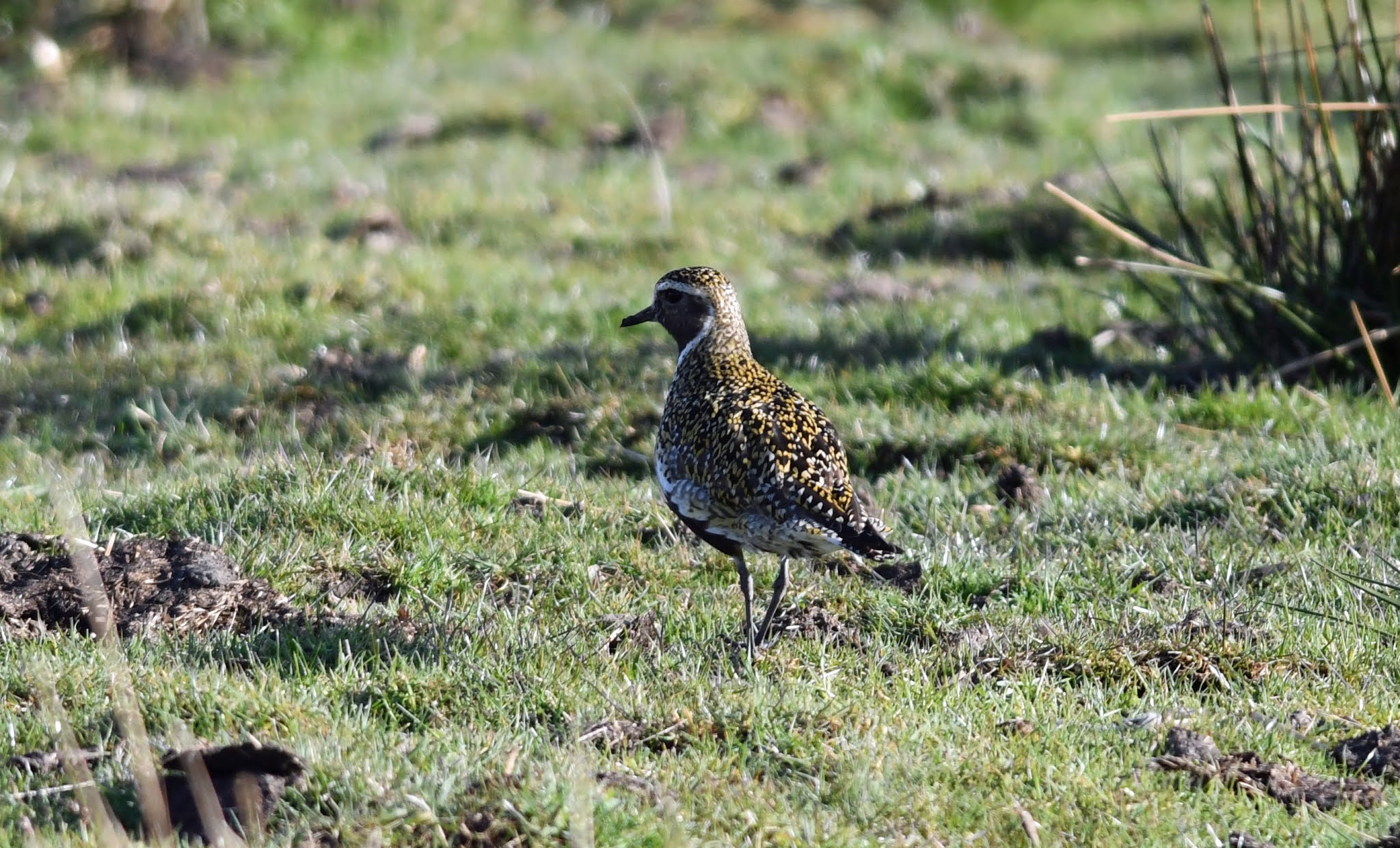
One bird that is not the easiest to see up on the moors is the Golden Plover. I will quite often hear it's haunting calls, but finding them in the scrubby grass, heathers and mosses is a whole different ball game. I happened to pull into a layby where I have seen them in the past. Just a couple of days earlier I had done the same with just one bird seen. On this occasion there were probably about twenty birds, and some quite close by. Again, the careful approach is necessary so as not to spook them. Use of the car, or stone wall is helpful to hide behind. I ended up on tiptoe in the middle of the road and managed not to disturb them. Stunning birds in their summer plumage, and the males looking particularly smart.

A good looking male Golden Plover.